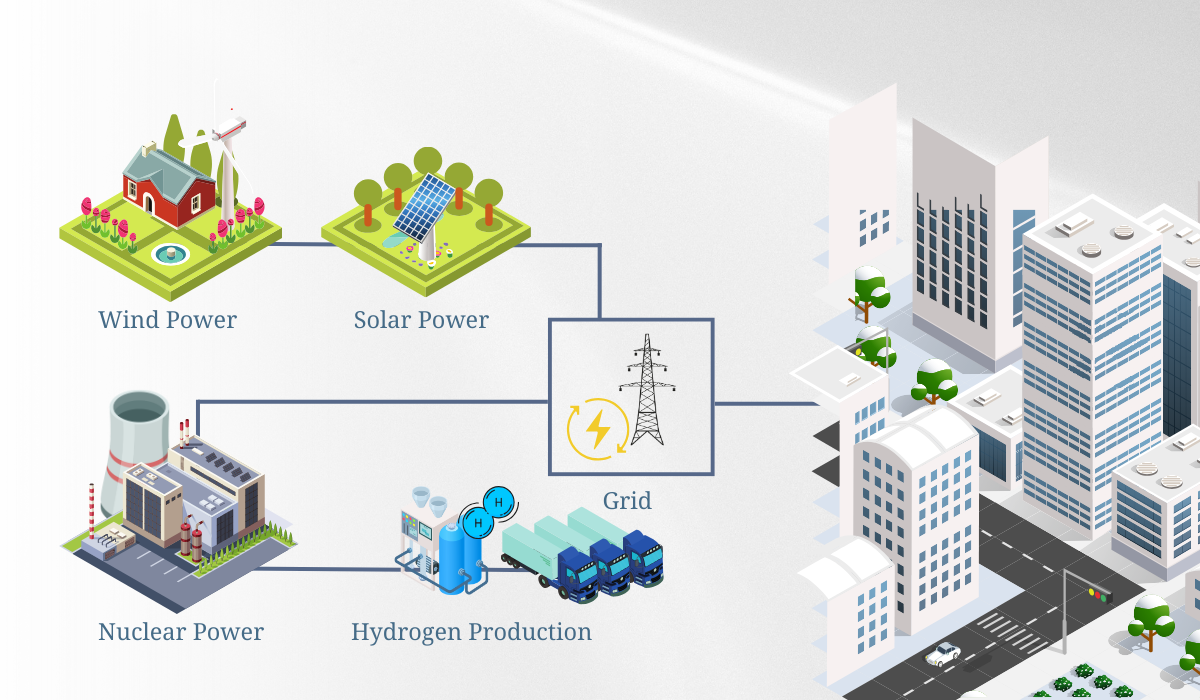
Nuclear ABC: H is forHybrid Energy Systems
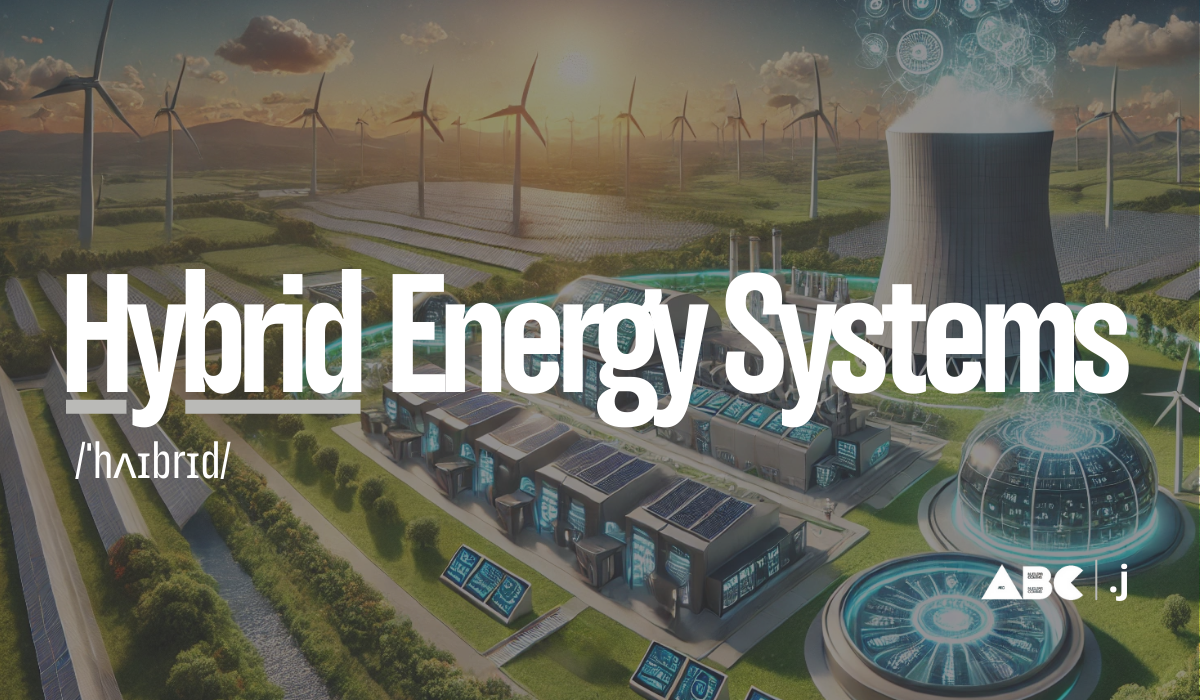
What People Get Wrong
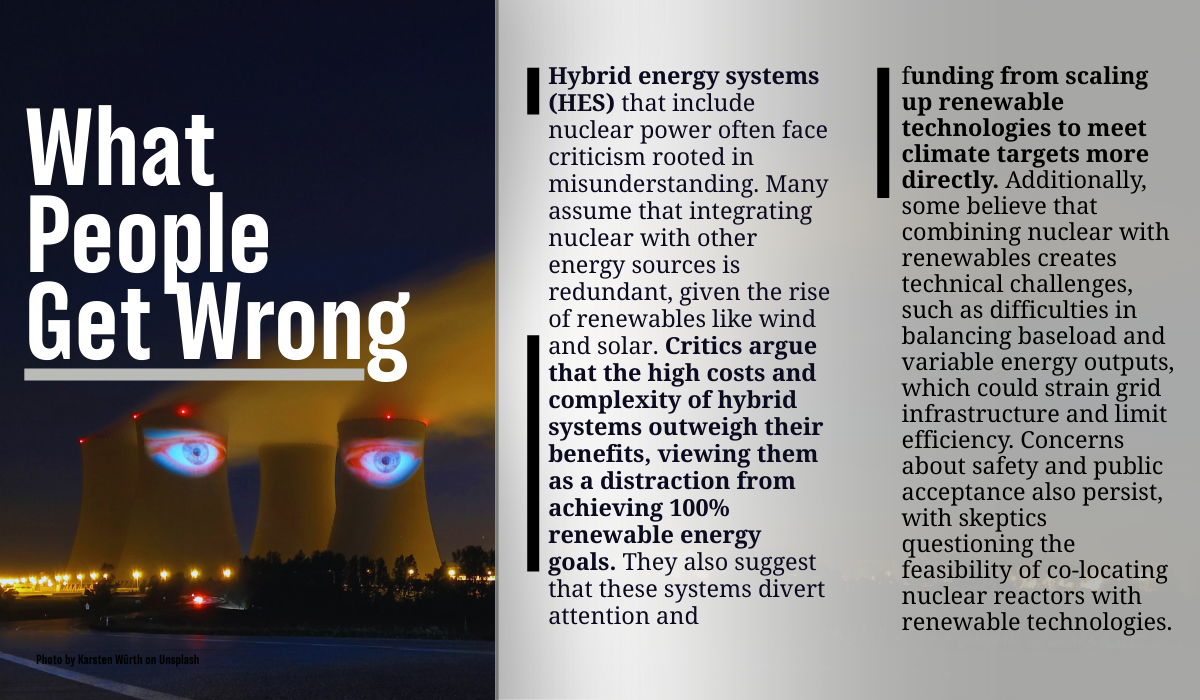
Hybrid Energy Systems (HES) that include nuclear often face skepticism.
The misconception? They’re too costly, too complex, and a distraction from achieving 100% renewable energy goals.
Critics argue that nuclear-renewable integration is redundant in a world rapidly scaling solar and wind. They worry these systems will divert funding from pure renewables, create technical challenges in balancing variable and baseload power, and strain grid infrastructure. Concerns about safety, public perception, and feasibility of co-locating technologies also add to the doubt.
Nuclear Reality Check
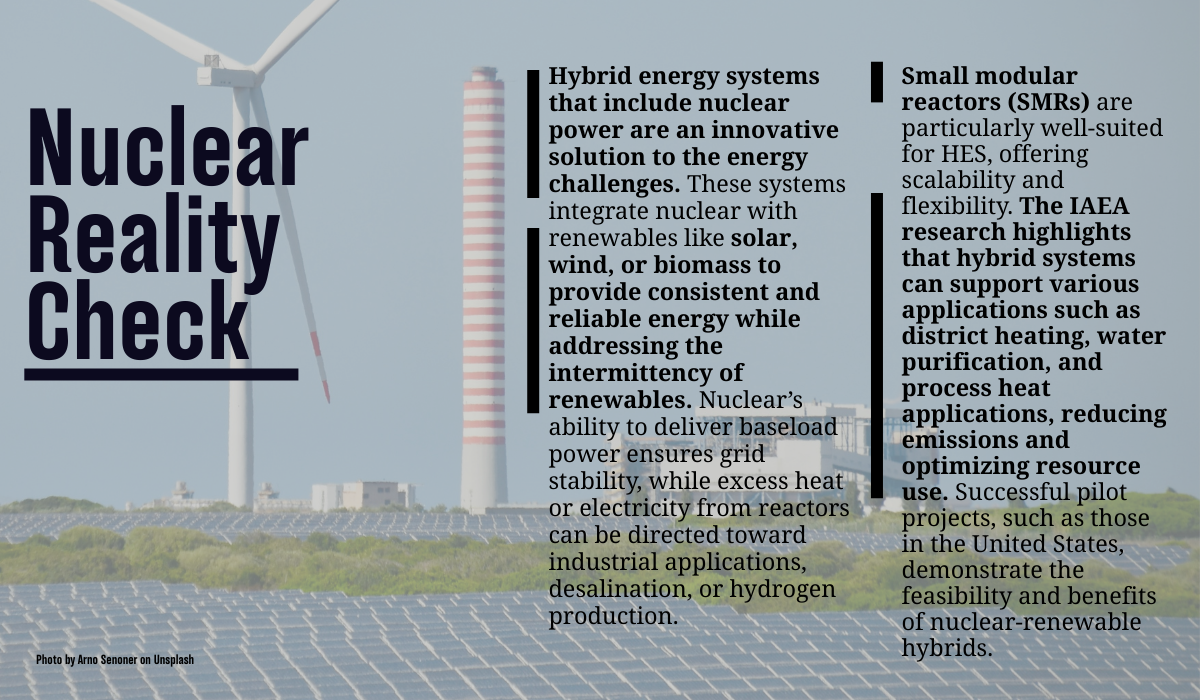
In truth, HES that combine nuclear with renewables like wind, solar, or biomass offer one of the most resilient and flexible solutions to modern energy needs.
By pairing variable renewables with nuclear’s constant baseload output, hybrid systems can deliver reliable, stable power while making the most of surplus energy for hydrogen production, desalination, or industrial heat.
Small Modular Reactors (SMRs) are especially well-suited for HES due to their scalability and ability to integrate into diverse energy networks. According to the IAEA, hybrid systems can reduce emissions, improve efficiency, and unlock new applications — from district heating to water purification.
Real-world pilots, especially in the U.S., show that nuclear-renewable hybrids are both feasible and beneficial.
Facts That Matter
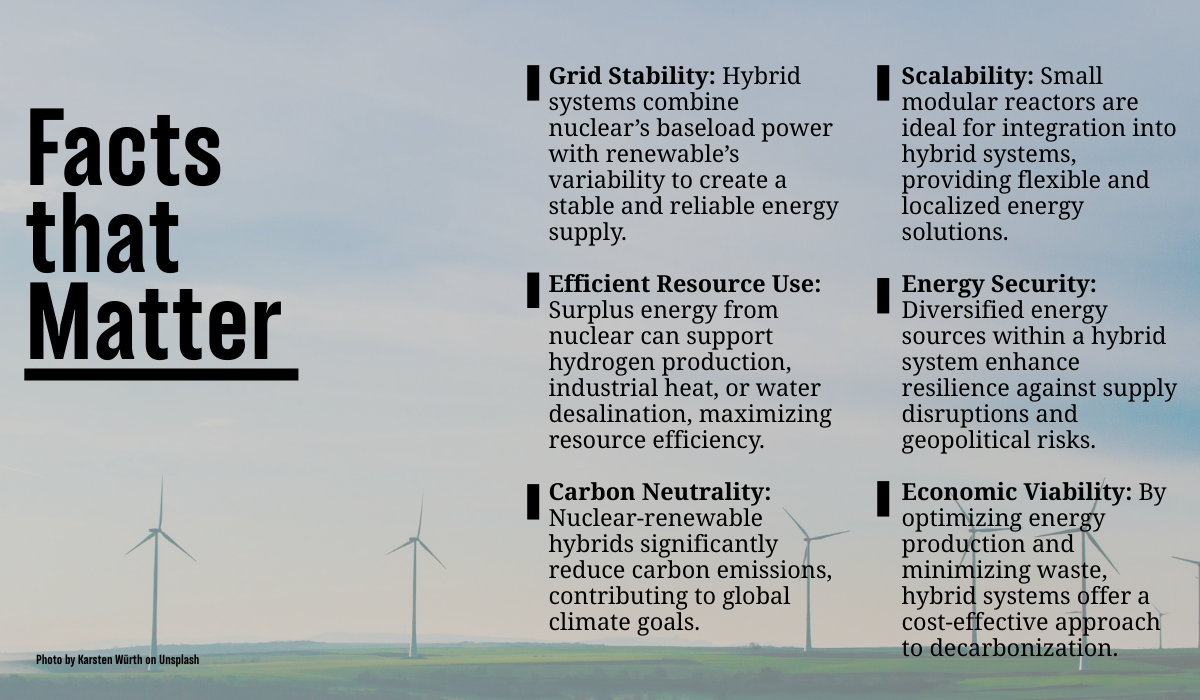
- ⚡ Grid Stability: Combines baseload nuclear with variable renewables for a balanced energy mix.
- 💧 Efficient Resource Use: Surplus nuclear output can support hydrogen production, desalination, and industrial processes.
- 🌍 Carbon Neutrality: Hybrid systems reduce emissions and help meet climate targets.
- 📈 Scalability: SMRs make it easier to deploy nuclear in diverse hybrid configurations.
- 🔒 Energy Security: Diversified energy sources reduce risks from supply disruptions.
- 💰 Economic Viability: Optimized energy use and minimized waste make HES cost-effective.