Accident
What People Get Wrong
When people think of nuclear power, the word “accident” often comes to mind — and not in a small way. Images of Chernobyl and Fukushima loom large in the public imagination. These events were real, serious, and impactful. But they’ve also contributed to a widespread misconception: that nuclear energy is inherently unsafe.
Yes, nuclear accidents can have severe consequences — radiation exposure, environmental damage, and health risks. But this perception doesn’t tell the full story.
Reality Check
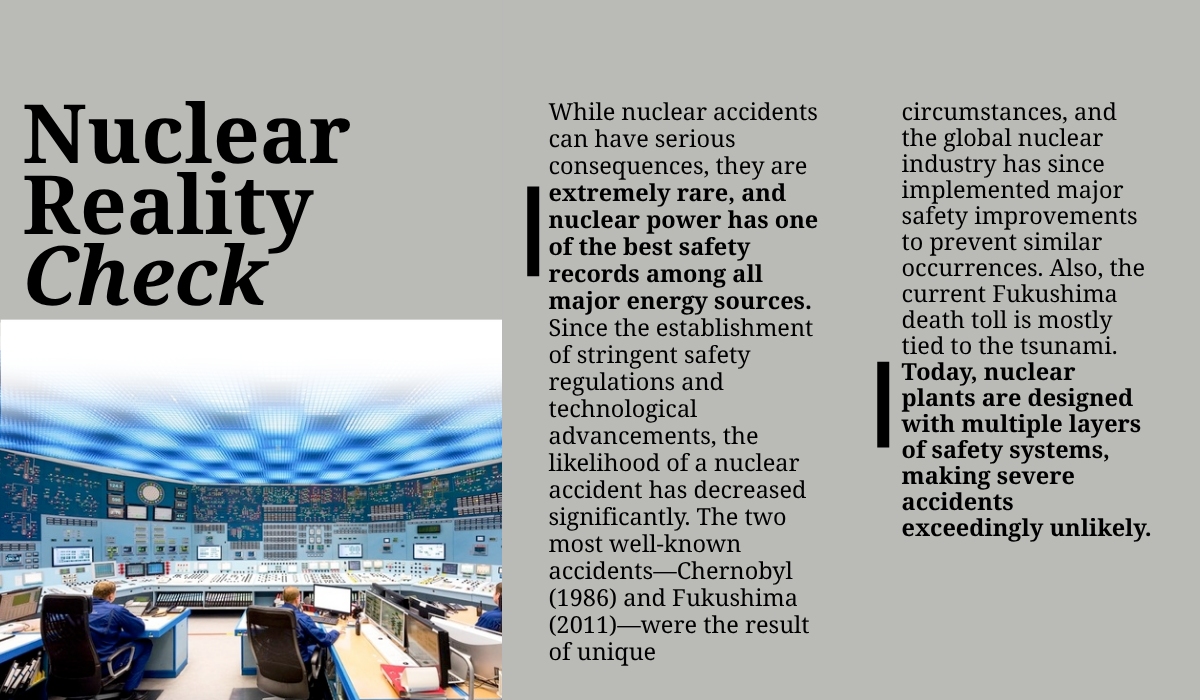
In truth, nuclear power has one of the strongest safety records of any major energy source. Thanks to decades of innovation, strict regulation, and rigorous safety protocols, the risk of a severe nuclear accident is extremely low.
Chernobyl and Fukushima were the result of unique failures: outdated reactor designs, natural disasters, and gaps in safety culture. Since then, the industry has learned, adapted, and implemented sweeping improvements.
Today’s reactors are designed with multiple layers of safety. They’re built to handle extreme natural events, equipment failure, and even human error.
Facts That Matter
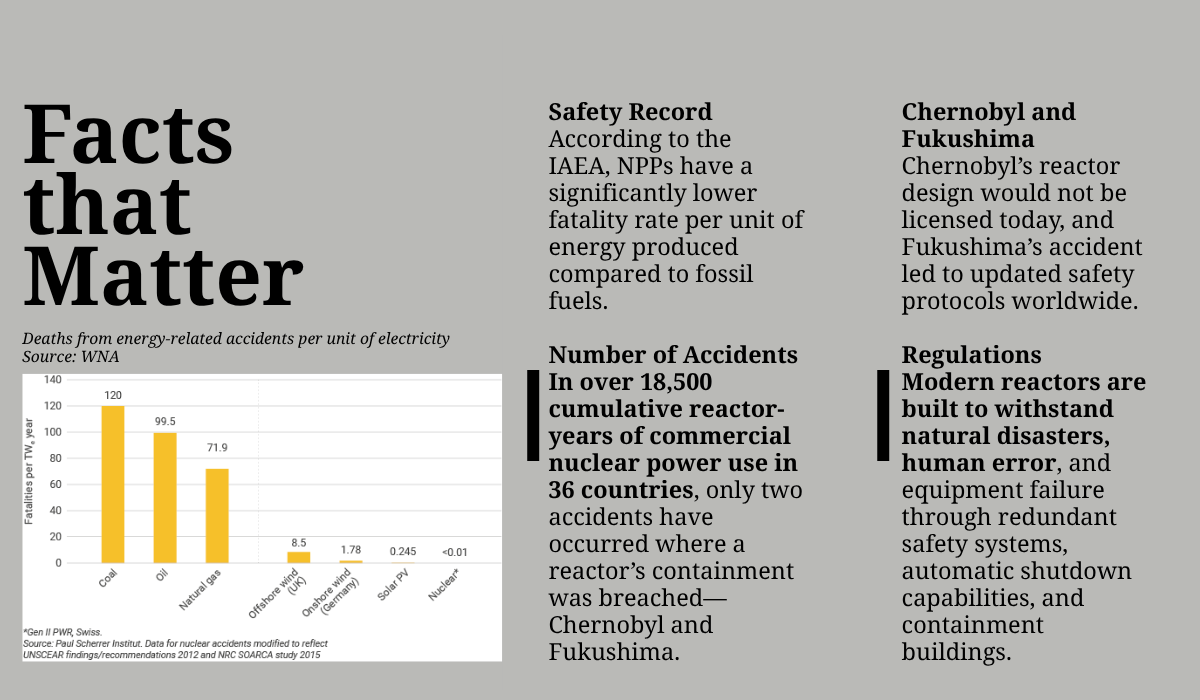
Let’s look at the data:
- Nuclear energy has the lowest death rate per terawatt-hour of electricity produced, far lower than coal, oil, or even renewables like wind and solar.
- In over 18,500 reactor-years of operation across 36 countries, only two major accidents breached reactor containment.
- Modern reactors wouldn’t allow a Chernobyl-style event to occur — ever.
Nuclear isn’t just safe. It’s one of the safest.