Nuclear ABC: E is for Enrichment
What People Get Wrong
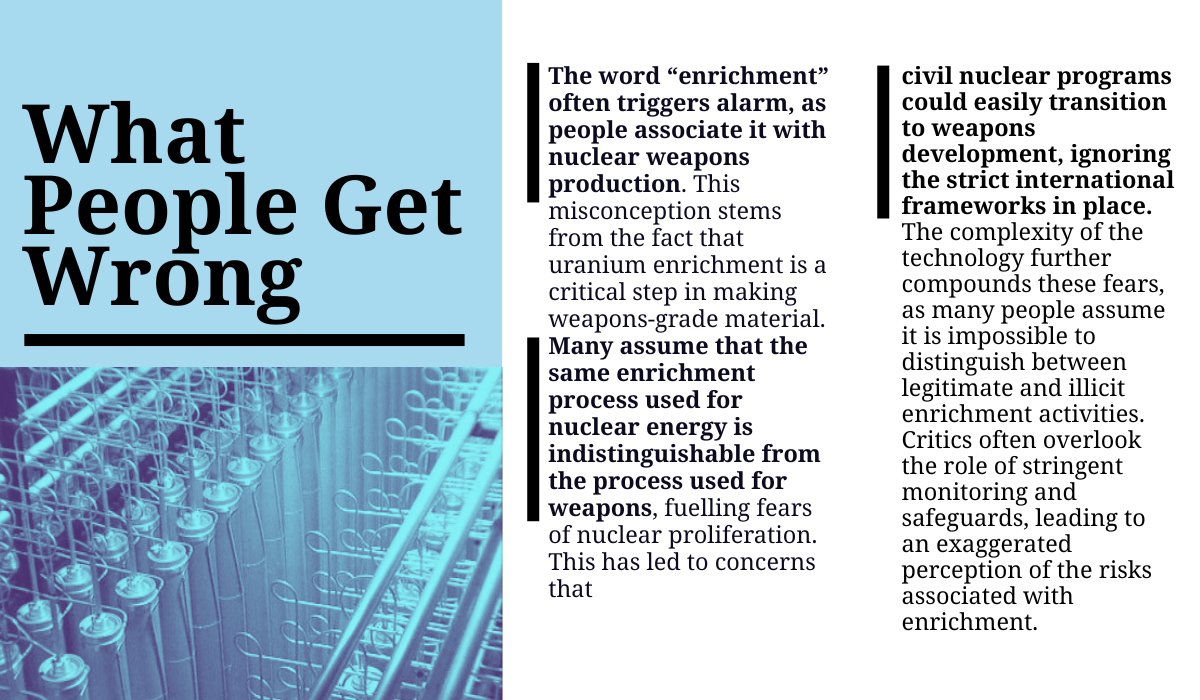
“Enrichment” is one of those nuclear terms that instantly raises eyebrows.
For many, it evokes images of weapons programs, secrecy, and global tension.
The misconception? That uranium enrichment for energy is the same process — or dangerously close — to producing nuclear weapons.
This misunderstanding fuels fear around nuclear proliferation and assumes civil nuclear programs could easily be repurposed for weapons. It also overlooks decades of international safeguards, regulations, and inspections that keep enrichment secure and peaceful.
Nuclear Reality Check
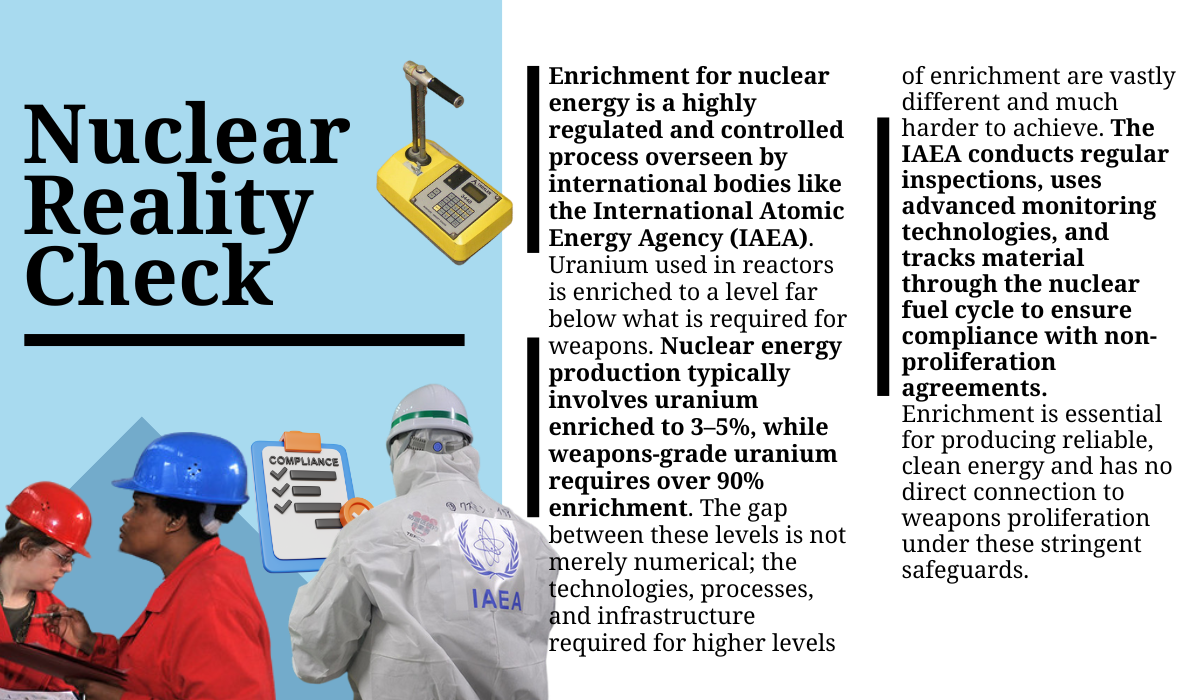
In reality, enrichment for nuclear energy is a completely different process — both in purpose and in practice — from enrichment for weapons.
Energy-grade uranium is enriched to 3–5%. Weapons-grade uranium requires over 90% enrichment — a massive technological leap requiring specialized equipment and infrastructure.
The process is tightly monitored by the International Atomic Energy Agency (IAEA) and other global bodies. These organizations conduct inspections, track fuel from production to disposal, and ensure compliance with non-proliferation treaties.
Peaceful nuclear programs operate under constant scrutiny, making misuse extremely difficult in any compliant nation.
Facts That Matter
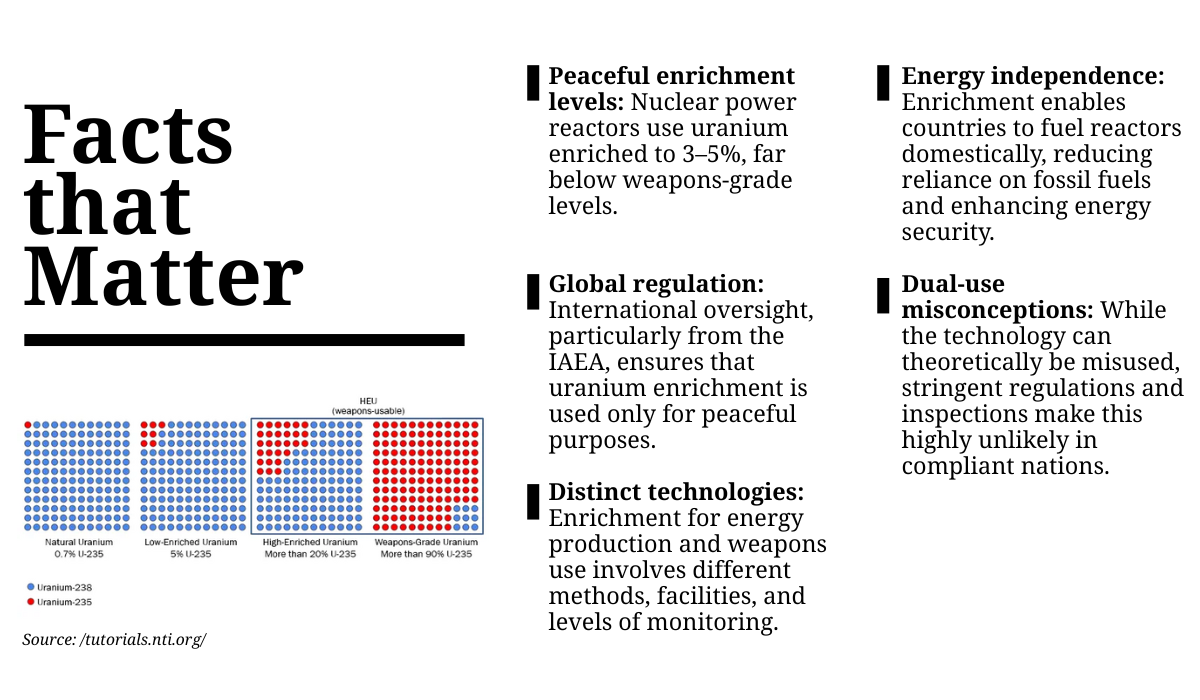
🔬 Peaceful enrichment levels: Energy-grade uranium (3–5%) is far below weapons-grade levels (90%+).
🌍 Global regulation: The IAEA ensures strict oversight, regular inspections, and full accountability.
🧪 Distinct technologies: Civil and military enrichment use different processes, facilities, and safeguards.
🔐 Non-proliferation compliance: Material is monitored throughout the fuel cycle.
⚡ Energy independence: Enrichment lets countries fuel their own reactors, reducing reliance on imports and fossil fuels.
🚫 Dual-use concerns are overstated in regulated environments — especially with today’s verification tools.
🌍 Global regulation: The IAEA ensures strict oversight, regular inspections, and full accountability.
🧪 Distinct technologies: Civil and military enrichment use different processes, facilities, and safeguards.
🔐 Non-proliferation compliance: Material is monitored throughout the fuel cycle.
⚡ Energy independence: Enrichment lets countries fuel their own reactors, reducing reliance on imports and fossil fuels.
🚫 Dual-use concerns are overstated in regulated environments — especially with today’s verification tools.